Why Your Next Computer Vision Model Won't Live in the Cloud
Edge computer vision finally grew up in 2026. Here's why real-time vision AI moved to the device—and how to ship it without breaking your pipeline.
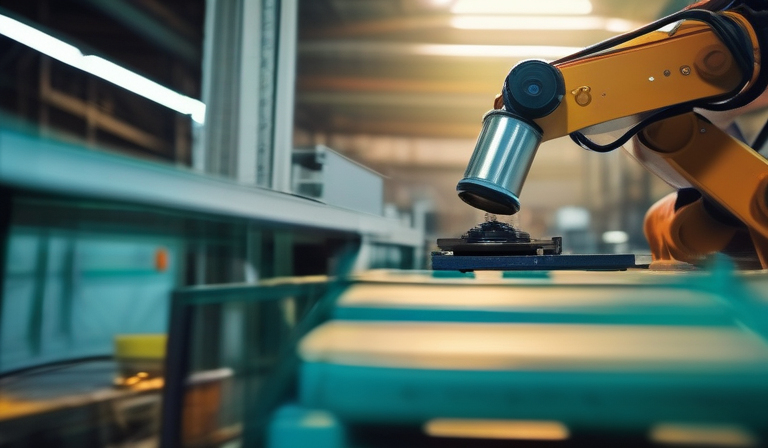
For years, computer vision had a dirty secret: the smart part lived in a data center. A camera captured a frame, shipped it over the network, and waited for a GPU somewhere else to decide what it was looking at. That round trip was fine for tagging vacation photos. It falls apart when a robot arm needs to stop before it crushes something.
In 2026, that architecture is quietly dying. The interesting work has moved to the edge—onto the device, next to the sensor, where the latency budget is measured in milliseconds instead of seconds.
The latency math finally caught up
A 200ms round trip to the cloud is invisible when you're sorting tomatoes on a slow conveyor. It's catastrophic when a delivery drone is 3 meters from a power line. Edge inference cuts that to single-digit milliseconds, and the hardware to do it is now cheap and everywhere—NPUs baked into everything from industrial cameras to phones.
The other driver is bandwidth. Streaming 4K video from 500 cameras to a central cluster is a bill nobody wants to explain to finance. Running a quantized model on-device and sending only the interesting events upstream is both faster and dramatically cheaper.
Foundation models got small enough to ship
The real unlock wasn't faster chips. It was that multimodal foundation models got compressed into something that fits in a few hundred megabytes and still understands a scene. You no longer train a bespoke model per camera angle. You ship a general vision model and adapt it with a small prompt or a lightweight fine-tune.
Here's the rough shape of a modern edge pipeline:
| Stage | Where it runs | Why | |-------|---------------|-----| | Capture & preprocess | On-device | No network dependency | | Detection / segmentation | On-device NPU | Millisecond latency | | Reasoning & multimodal query | Hybrid | Complex cases escalate | | Aggregation & retraining | Cloud | Fleet-wide learning |
The hybrid row matters. Pure edge is a trap—your fleet drifts, and nobody notices until a model silently degrades in the field.
What actually breaks
Two things bite teams moving to the edge. First, thermal and power budgets: a model that benchmarks great on a dev board throttles in a sealed enclosure at 45°C. Second, observability. You can't SSH into 10,000 cameras, so you need lightweight telemetry—confidence distributions, drift signals, sample frames—baked in from day one.
Start here
Pick one high-latency workflow and instrument it before you optimize anything. Log per-frame inference time, confidence histograms, and a daily sample of edge cases. Then quantize your current model to INT8 and measure the accuracy hit on that real data—not a benchmark set. If it holds within your tolerance, you've found your first edge candidate. Ship it behind a kill switch, and let the fleet tell you what breaks.
The cloud isn't going away. But in 2026, the camera is where the thinking happens.